Mostar Attractions · 14 min read
Stari Most (Mostar Old Bridge) — History, Architecture & How to Visit in 2026
The complete Stari Most guide — built 1566, destroyed 1993, rebuilt 2004. Architecture, dimensions, the divers' tradition, the best photo angles, and how to visit. UNESCO World Heritage.
Quick answer
The complete Stari Most guide — built 1566, destroyed 1993, rebuilt 2004. Architecture, dimensions, the divers' tradition, the best photo angles, and how to visit. UNESCO World Heritage.
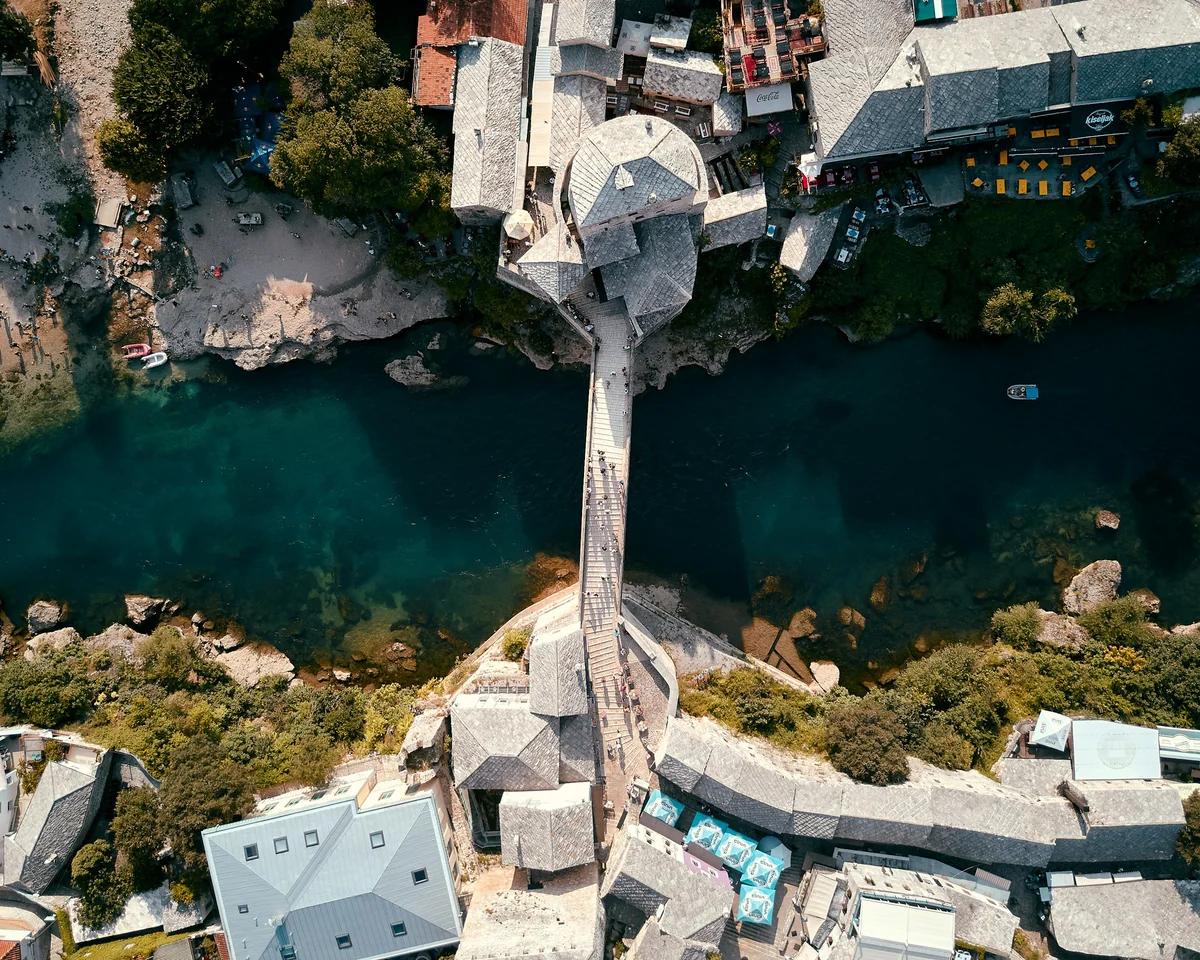
Quick answer: Stari Most is a single-arch Ottoman bridge built 1566, destroyed 9 November 1993, rebuilt 2001–2004, and UNESCO World Heritage since 2005. Open 24/7, free to walk. The bridge itself is 28.7 m long, 4 m wide, 24 m above the Neretva. The diving tradition has been unbroken since 1664. Best visit windows: before 09:30 or after 18:30, when day-trip crowds are gone. The €5 Old Bridge Museum (in the Tara tower) is worth 45 minutes for the destruction-and-rebuild archive.
For the diving tradition specifically see our Mostar bridge diving guide. For the city beyond the bridge see things to do in Mostar.
The bridge at a glance
| Built | 1557–1566 |
| Architect | Mimar Hayruddin (student of Mimar Sinan) |
| Commissioned by | Sultan Süleyman the Magnificent |
| Destroyed | 9 November 1993 |
| Rebuilt | 2001–2004 |
| Reopened | 23 July 2004 |
| UNESCO inscription | 2005 |
| Span | 28.7 m (single arch) |
| Width | 4 m |
| Height above water | 24 m |
| Material | Tenelija limestone (local) |
| Towers | Halebija (NE) + Tara (SW) — gave the city its name (mostari = bridge-keepers) |
A 460-year history in seven chapters
1. Before the bridge — the wooden one (pre-1557)
Before the stone arch, Mostar’s only Neretva crossing was a wooden suspension bridge that 17th-century Ottoman geographer Katip Çelebi described as swaying “so much that people crossed it in mortal fear.” As the city grew under Ottoman rule into a strategic link between the Adriatic and the interior, a permanent stone bridge became necessary.
2. The Ottoman commission (1557)
Sultan Süleyman the Magnificent commissioned the new bridge in 1557, assigning the design to Mimar Hayruddin — a student of the great Ottoman architect Mimar Sinan, who designed many of the empire’s largest mosques. The commission included the Halebija and Tara towers flanking the bridge, plus a fortified guard system.
3. Construction (1557–1566)
Hayruddin’s design was a single arch in Tenelija limestone quarried locally, built using dry-stone Ottoman techniques: iron clamps sealed in lead held the stones, with mortar reportedly mixed with horsehair, egg white, and ash. Construction took nine years. By legend, Hayruddin was so anxious about the moment the wooden scaffolding would come out from under the arch that he left the city before the demonstration, expecting the structure to fall — it didn’t.
4. Four centuries of standing (1566–1993)
For 427 years the bridge stood through Ottoman rule, Austro-Hungarian annexation (1878), Yugoslavia between two world wars, World War II, socialist Yugoslavia, and the early independence of Bosnia and Herzegovina (1992). Earthquakes shook it, floods rose under it, and it kept its shape.
5. The destruction (9 November 1993)
During the Croat–Bosniak phase of the Bosnian War, Bosnian Croat (HVO) tank and artillery fire systematically targeted Stari Most from the surrounding hills over multiple days of shelling. On the afternoon of 9 November 1993, the arch collapsed into the Neretva. The destruction was filmed live and broadcast internationally — it became the war’s most globally recognized act of cultural destruction. The ICTY at The Hague later prosecuted senior commanders for it.
6. The rebuild (2001–2004)
UNESCO led the reconstruction, with funding from the World Bank, the Aga Khan Trust for Culture, Croatia, Italy, Turkey, and the Netherlands. The plan was strict: same stone (Tenelija limestone from the same quarry), same techniques (dry-stone Ottoman construction), and where possible the same individual stones recovered from the riverbed — about 30% of the rebuilt bridge’s stone is original. Work took three years.
7. The reopening and UNESCO (2004–2005)
The rebuilt bridge was inaugurated on 23 July 2004 with international dignitaries present. UNESCO inscribed the entire Old Bridge Area of the Old City of Mostar as a World Heritage Site in 2005, citing both architectural value and the bridge’s role as a symbol of post-war reconciliation in the Balkans.
How to experience the bridge
Walk it — multiple times
Cross it once in daylight, once at dusk when it’s lit, once at night when it’s empty. The cobblestone surface is polished marble-cobble worn smooth by centuries of feet — slippery in rain or even when dry, dangerous in flat sandals. Wear shoes with grip.
The arch shape means you climb up 12 steps from each bank to the centre and down 12 the other side — old people manage with a brief rest at the centre.
Photograph from the right angles
The bridge from on top is uninteresting (you don’t see its arch). The five vantage points worth walking for:
- Eastern riverbank steps — classic side-view of the arch from below, near the Old Mosque. Walk down the cobble steps to river level.
- Crooked Bridge approach (5 min upstream) — wide frame including both bridges and the cliff face above the Old Bazaar.
- Koski Mehmed-Pasha mosque minaret (€2 entry, narrow stairs) — aerial view directly above.
- Lučki Most (15 min walk downstream) — wide-angle Mostar skyline with the bridge as a small jewel; best at sunset.
- The Tabhana courtyard at night — bridge lit, day-trippers gone, locals walking by; this is the bridge that locals know.
For more vantage points see Mostar photography spots.
Visit the Old Bridge Museum
Inside the Tara tower (southwest end of the bridge). Three floors covering: original 1566 construction (Ottoman drawings and survey maps), the 1993 destruction (recovered fragments and video archive), and the 2001–2004 reconstruction process. €5 entry, 45–60 minutes. Worth it especially after you’ve crossed the bridge — it changes how you see what you just walked.
Hours: 09:00–18:00 May–October, 10:00–16:00 November–April.
Watch the divers (if any are jumping)
The Mostar Divers Club jumps daily 11:00–15:00 in peak season (May–October), less reliably outside. Each cycle (tip collection → splash) takes 10–20 minutes. Tip €2–5 per person before the jump, in the bucket. Do not attempt to jump yourself. See the dedicated Mostar bridge diving guide for full history, hours, and photography.
Cross at off-hours
The single biggest upgrade for any Stari Most visit is staying one night. Day-tour coaches arrive 10:00–11:00 and leave by 17:30–18:00. The two beautiful windows are before 09:30 (golden morning light, almost empty) and after 18:30 (lit, locals out for šetnja, the evening walk). The bridge at midnight, empty and lit, is the photo most travellers don’t take because they didn’t sleep here.
Common visitor mistakes
- Day-tripping from the coast and missing the night-bridge — you see Stari Most at its most crowded and miss the half that makes it worth coming.
- Wearing flat sandals on the bridge surface — polished cobble that becomes slippery wet or dry. Real shoes with grip.
- Trying to photograph divers from the bridge top — you see backs and splashes only. Walk to the riverbank.
- Climbing the parapet for a ‘photo’ — staff will stop you, locals will stop you, and the bridge surface near the parapet is uneven enough to genuinely fall from.
- Skipping the Old Bridge Museum — €5 and 45 minutes that completely change what the bridge means after.
- Attempting the dive yourself — fatal injuries have occurred. The Mostar Divers Club does not offer single-day or even single-week training to outside visitors. Don’t.
- Picking a restaurant by tout-energy alone — both top-rated kitchens and tourist traps sit within 30 metres of each other in the Old Bazaar. Use a verified shortlist like our best restaurants in Mostar rather than walking in cold.
- Believing every legend you read — Hayruddin did not “blind himself” before the unveiling (a popular embellishment, not historical record); recovered original stones make up 30% not 90% of the rebuild; “10 women jumpers” claim is unverifiable. Stick to dated facts.
Visit on a guided tour
For city context, our Mostar Walking Tour (€25, 2 hours) starts at 10:00, covers the bridge, towers, mosque, Old Bazaar, and the war/rebuild story with on-site historical context. We typically arrive at the bridge around 11:00 — the moment when the divers start their day.
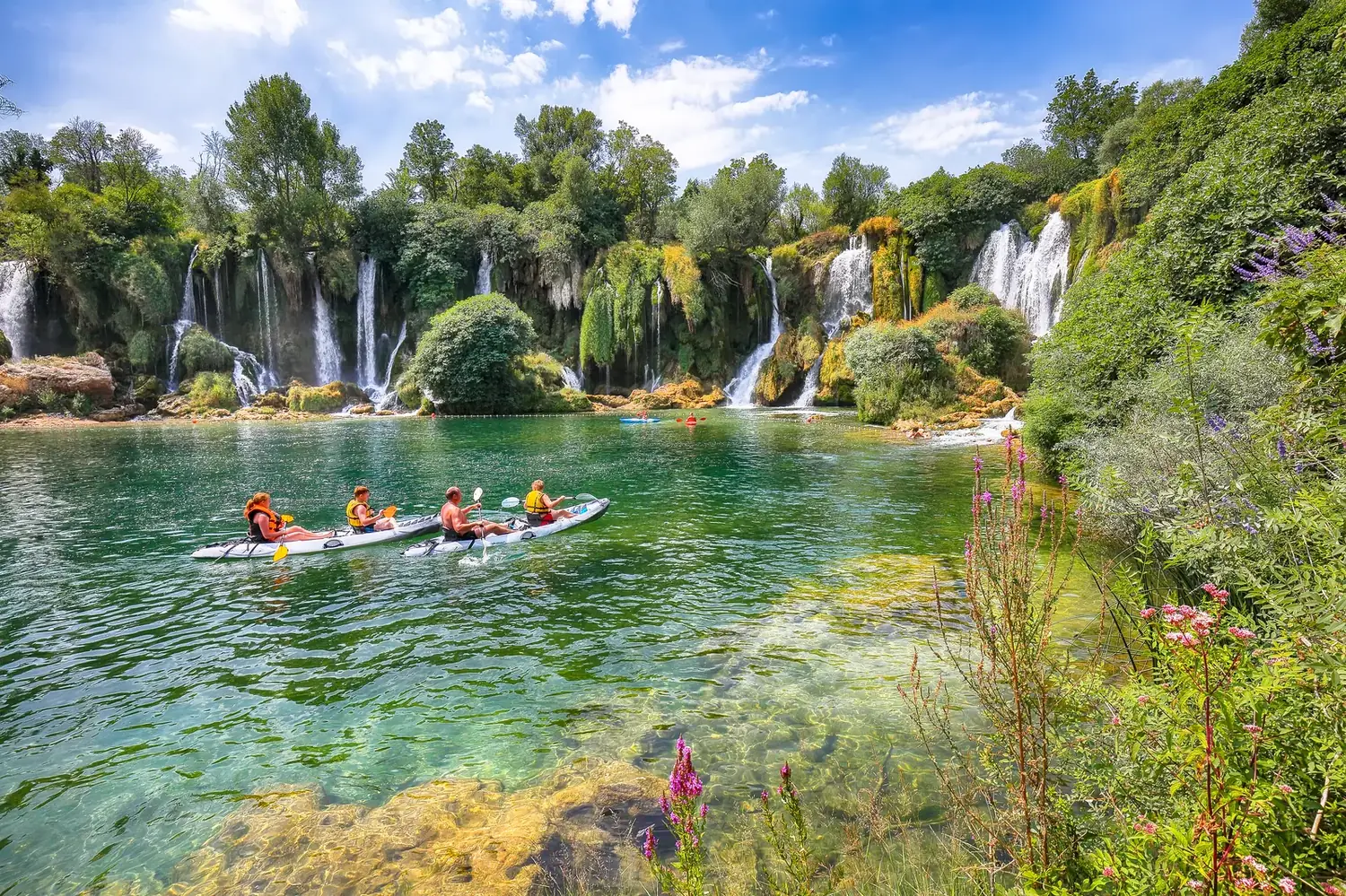
For a full-day combination of bridge city + regional sites, our Kravica Waterfall day tour from Mostar combines the city with Kravica + Blagaj + Počitelj in one day. €50/person, hotel pickup.
For multi-stop custom trips, private transfers from Mostar start at €60/vehicle for short routes. WhatsApp +387 61 209 388.
Related guides
- Mostar bridge diving guide — the divers, tipping, photography
- Things to do in Mostar — full 20-stop city pillar
- Mostar travel guide — first-timer essentials
- Mostar 1-2-3 day itinerary — hour-by-hour plans
- Best restaurants in Mostar — 12 local picks
- Mostar photography spots — full vantage-point map
- Mostar walking tour — guided 2-hour Old Town walk
FAQ
Frequently asked questions
How old is the Mostar Old Bridge?
**The original was built 1557–1566** by Ottoman architect Mimar Hayruddin (a student of the famous Mimar Sinan), commissioned by Sultan Süleyman the Magnificent. It stood for **427 years** until **9 November 1993**, when it was destroyed by Croat artillery shelling during the war. **Reconstruction took 2001–2004**, using the same Tenelija limestone from the same local quarry, the same Ottoman techniques, and where possible the original stones recovered from the riverbed. The rebuilt bridge was inaugurated 23 July 2004 and inscribed as **UNESCO World Heritage in 2005**.
Why is Stari Most famous?
Three reasons. **(1) The architecture**: a single 28.7-metre Ottoman arch built without modern steel reinforcement, considered one of the great engineering achievements of the 16th century. **(2) The destruction and rebuild**: deliberately destroyed in 1993 (the world watched live on TV) then meticulously rebuilt — it became the global symbol of post-war reconciliation in the Balkans. **(3) The divers**: an unbroken jumping tradition since 1664, with the annual Red Bull Cliff Diving World Series stop since 2015. UNESCO inscribed the entire 'Old Bridge Area of the Old City of Mostar' in 2005.
Is the bridge open 24 hours? Is there an entry fee?
**Open 24/7, free.** The bridge is the main pedestrian route between the east and west banks of the Old Town — locals cross it dozens of times a day. There's no gate, no ticket, no closing time. The **Old Bridge Museum** inside the Tara tower (the southwest tower) charges €5 entry and is open 09:00–18:00 in summer, 10:00–16:00 in winter. The bridge itself you can walk at 03:00 if you want — and the empty bridge in the small hours is a real Mostar moment.
Can I jump from the bridge?
**No, never — only certified Mostar Divers Club members jump.** The 24-metre drop into the cold (10–14°C even in summer) Neretva has killed and paralysed every untrained jumper who has tried. Train under existing club members for 1–3 years before your first solo jump is the only legitimate path. Tourists routinely ask if they can pay for a 'lesson and jump' — every diver says no. See our **[Mostar bridge diving guide](/mostar-bridge-diving-guide/)** for the full diver tradition, history, and how to watch and tip safely.
When do the bridge divers jump?
**Peak activity 11:00–15:00 in May–October**, with most action at lunchtime when crowds peak and tip buckets fill fastest. Off-season jumps are rare. Each diver collects roughly €20–40 in their bucket before jumping — €2–5 per spectator is standard. The annual **Red Bull Cliff Diving World Series** stop happens late August or early September each year. See **[full diving guide](/mostar-bridge-diving-guide/)** for hours, photography, and tipping protocol.
What are the best photo angles of Stari Most?
**Five vantage points worth knowing**: (1) **Eastern riverbank steps** — the classic side-view, walk down to the rocky riverbank near the Old Mosque. (2) **Crooked Bridge approach (5 min upstream)** — wide-angle frame including both bridges and the cliff face. (3) **Koski Mehmed-Pasha mosque minaret** (€2 entry) — aerial view from above. (4) **Lučki Most** (15 min walk downstream) — wide-angle skyline at sunset. (5) **The Tabhana courtyard at night** — bridge lit, no day-trippers, locals out for evening walk. **Avoid the bridge top itself for diver photos** — you'll only see backs.
What's the dimension and engineering of the bridge?
**Span**: 28.7 metres (95 feet) single arch. **Width**: 4 metres (13 feet). **Height above the Neretva**: 24 metres (79 feet) at peak summer water level, more in autumn-winter low flow. **Material**: Tenelija limestone, locally quarried from the same hill the bridge stands above. **Construction technique**: dry-stone Ottoman arch with iron clamps sealed in lead and (per period sources) mortar mixed with horsehair, eggwhite and ash to bind the stones. **Two flanking towers**: Halebija (NE) and Tara (SW) — the keepers in these towers (the *mostari*) gave the city its name.
How was the bridge destroyed in 1993?
**On 9 November 1993** during the Croat–Bosniak phase of the war, Bosnian Croat (HVO) tank and artillery fire systematically shelled the bridge from the surrounding hills. After hours of bombardment, the elegant arch collapsed into the Neretva late afternoon — the moment was filmed and broadcast worldwide and is preserved in the Old Bridge Museum's video archive. The destruction was widely condemned as the deliberate erasure of cultural heritage. The ICTY at The Hague later prosecuted the destruction as a war crime; commanders involved received sentences of 18–25 years.
How was the bridge rebuilt?
Reconstruction was overseen by **UNESCO**, funded by the World Bank, the Aga Khan Trust for Culture, and various national donors (notably Croatia, Italy, Turkey, the Netherlands). Work ran **2001–2004**. Engineers recovered as many original stones from the Neretva riverbed as possible (about 30% of the bridge's stone is original) and quarried matching Tenelija limestone for the rest. The same dry-stone Ottoman techniques were replicated. The rebuilt bridge was inaugurated 23 July 2004 with a public ceremony attended by international dignitaries. UNESCO inscribed the entire Old Bridge Area in 2005, citing both the bridge's architectural value and its role as a symbol of post-war reconciliation.
What's the Old Bridge Museum?
Located in the **Tara tower** (southwest end of the bridge). Three floors of exhibits covering: the original 1566 construction (Ottoman period maps, drawings, restoration archive), the 1993 destruction (recovered fragments, video archive of the shelling), and the 2001–2004 reconstruction process. Photography allowed. **€5 entry**, open 09:00–18:00 summer, 10:00–16:00 winter. Allow 45–60 minutes. Worth the visit even if you've already crossed the bridge — you understand it differently after.
What else is worth seeing right at the bridge?
Within 5 minutes' walk: the **Crooked Bridge (Kriva Ćuprija)** built 1558, predates Stari Most and was the test build for it; **Koski Mehmed-Pasha Mosque** (1618) for the minaret view (€2); the **Old Bazaar (Kujundžiluk)** with working coppersmiths; the **Tabhana** courtyard for café terraces; the **Bišćević House** (Ottoman residential museum, €3); and the **riverbank steps** on both banks for under-bridge views. See our **[Things to do in Mostar](/things-to-do-in-mostar/)** city pillar for the full 20-stop list.
When's the best time to visit Stari Most?
**Stay one night minimum**. The bridge's two best windows are **before 09:30** and **after 18:30** when the day-trippers from Dubrovnik / Split / Sarajevo coaches are gone. Daytime visit windows are crowded May–September; the bridge feels different (and is more photographable) at sunrise, after sunset, and especially when lit at night with no foot traffic. **Best months overall**: May–June and September–October. Winter visits are atmospheric (occasional snow on the limestone is dramatic) and crowd-free, but some Old Bazaar shops take a winter break.