Destinations · 6 min read
Vjetrenica Cave — Bosnia's Most Biodiverse Underground (Trebinje Region)
Vjetrenica Cave near Trebinje — 6.7 km of mapped passages, 220+ species (more than any other cave in Europe), Roman-era inscriptions. Hours, €10 entry, what to bring, how to get there from Mostar.
Quick answer
Vjetrenica Cave near Trebinje — 6.7 km of mapped passages, 220+ species (more than any other cave in Europe), Roman-era inscriptions. Hours, €10 entry, what to bring, how to get there from Mostar.
Vjetrenica is the most biologically diverse cave on Earth — 220+ documented species including blind fish, transparent crustaceans, the rare olm salamander, and Roman-era inscriptions on the walls. It sits in the limestone karst of Popovo polje, in the village of Zavala, 14 km west of Trebinje and roughly 2 hours’ drive from Mostar.
What you see on the tour
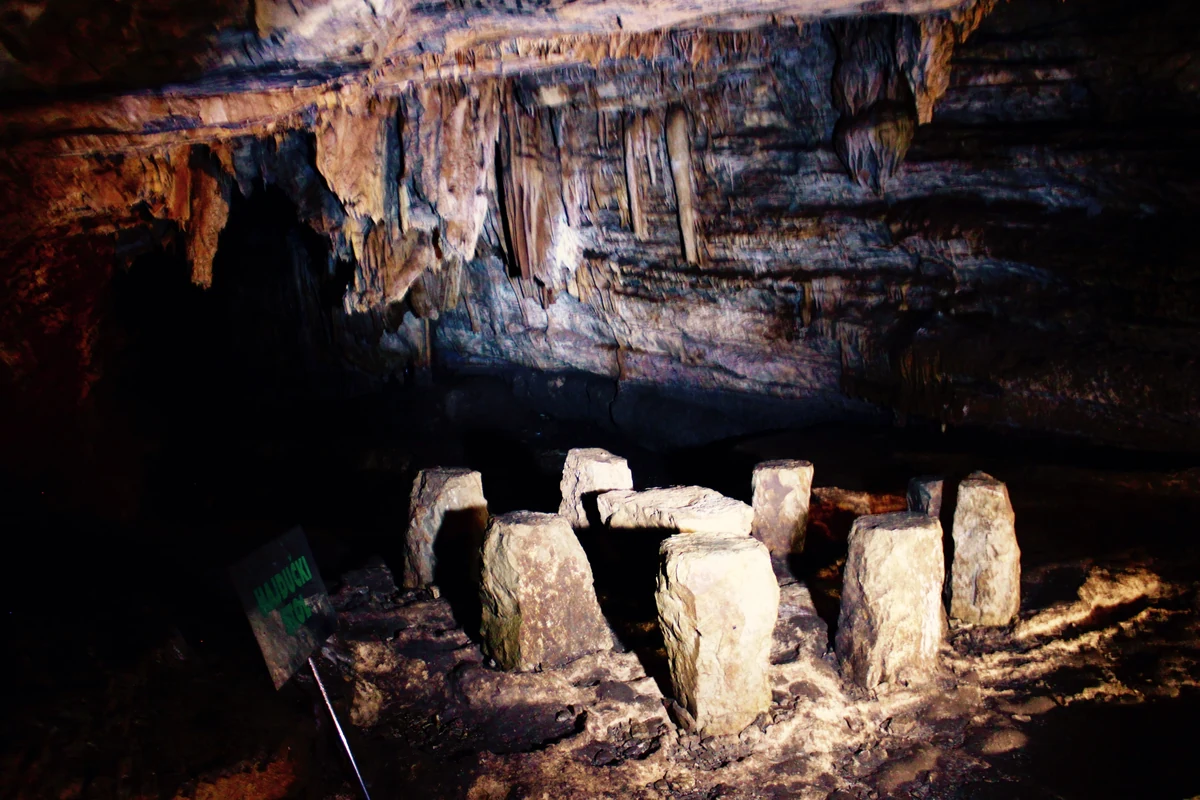
The standard guided tour covers the first 800 m of the system — about 60 minutes underground. The path is paved, electrically lit, and follows a slow descent through three large halls connected by narrow passages. Highlights, in order:
- Cave entrance and the wind — Vjetrenica means “windy cave” in Bosnian, after the powerful airflow that blows out of the entrance year-round (a function of the cave’s enormous internal volume).
- Roman inscriptions — partial Latin graffiti carved into the walls in the first 100 m, dating to the 1st–4th century AD. Locals were aware of the cave for at least 2,000 years.
- The Great Hall (Velika dvorana) — chamber 400 m in, ~50 m wide and 30 m tall, the most photographed section.
- The Lake Passages — small underground pools where you may see the olm (Proteus anguinus) — pale, eyeless aquatic salamander, found nowhere outside the Dinaric karst. Sightings are not guaranteed; ask the guide to point one out.
- Cave paintings — small section near the end with prehistoric pigment marks.
Why scientists care
Vjetrenica is a type locality — a place where multiple species were first scientifically described. Of the 220+ species recorded, 37 are endemic (found nowhere else). The cave is on Bosnia’s UNESCO World Heritage tentative list and is a Ramsar wetland.
Practical info
| Entry | €10 / 20 KM adult, €6 / 12 KM child — cash only |
| Hours | Daily 09:00–17:00, April–November (closed Dec–Mar) |
| Tour length | ~60 minutes underground + 10 min briefing |
| Temperature | Constant 11 °C / 52 °F — bring a jacket |
| Photography | Yes; no flash, no tripod |
| Wheelchair | No (50+ steps, uneven sections) |
| Parking | Free, ~50 m from the entrance |
Combine with Trebinje
If you’ve come this far, spend the rest of the day in Trebinje — the southernmost town of Bosnia & Herzegovina, 30 minutes east. Trebinje has a small but well-preserved Old Town (Stari Grad) along the Trebišnjica river, the working Tvrdoš Monastery (16th-century Orthodox monastery and one of Bosnia’s main wine producers), and several restaurants known for Herzegovinian wines (Tribunia, Vukoje, Carski Vinogradi). Lunch + walk + monastery visit ≈ 3 hours.
For a full Mostar → Vjetrenica → Trebinje round trip (≈ 10 hours total), WhatsApp us — we run this as a custom private tour on demand. It is not part of our standard scheduled tours.
FAQ
Frequently asked questions
Where is Vjetrenica Cave?
In **Popovo polje**, in the village of **Zavala**, 14 km west of **Trebinje** (Republika Srpska entity, southern Bosnia & Herzegovina). About 2 hours' drive from Mostar via the M-6 road, or 30 minutes from Trebinje.
What makes Vjetrenica special?
It is the **most biodiverse cave on Earth** — 220+ documented species, more than any other single cave system in the world. Includes endemic crustaceans (Niphargus, Asellus), a blind cave fish (Phoxinellus alepidotus), the rare olm (Proteus anguinus), and bats. It also holds Roman inscriptions, prehistoric cave paintings, and a powerful airflow at the entrance from which it gets its name (*vjetar* = wind).
How long is the cave?
**6.7 km of mapped passages** with depths down to 240 m below ground. Of that, only **the first ~800 m** is open to visitors on the standard tour. The rest is restricted to scientific expeditions. Total system likely extends much further — exploration is ongoing.
What's the entry fee?
**€10 / 20 KM per adult**, €6 / 12 KM per child. Includes the guided tour (~60 minutes). No card payment at the gate — bring cash. Open April–November.
Hours and opening dates?
**April–November only** — the cave closes in winter to allow bats to hibernate undisturbed. Tours run **daily 09:00–17:00**, last entry 16:00. Tours leave on the hour. In peak summer (Jul–Aug) book ahead — same-day spots are not guaranteed.
What's the temperature inside?
**Constant 11 °C / 52 °F** year-round, regardless of outside weather. In July when it's 35 °C outside, that 24 °C drop hits hard. Bring a long-sleeve top or jacket. Avoid sandals — paths are damp and partly uneven.
Can I take photos?
Yes, but **no flash** (disturbs bats) and **no tripod** without prior permission. Smartphones do fine; the cave is well-lit by static lamps. The most photogenic section is the *Velika dvorana* (Great Hall), 400 m in.
Is it suitable for kids?
**Yes, ages 6+** comfortably. The path is paved and lit, no climbing or crawling. Younger children may find the constant temperature drop and 60-minute walk tiring. Strollers do NOT fit through some passages.
Wheelchair access?
**No** — the cave path includes 50+ steps and uneven sections. Not wheelchair-accessible.
How do I get to Vjetrenica from Mostar?
**By car:** ~2 hours via M-6 (Mostar → Stolac → Ljubinje → Zavala). **By tour:** include it on a Trebinje + Vjetrenica day trip with us — [contact us via WhatsApp](https://wa.me/38761209388) for a custom day from Mostar covering both. **Public transport:** very limited — there's no direct bus to Zavala. Realistic options are car or arranged transfer.